Wednesday, March 30, 2016

Venture Concept No. 1

Opportunity

            The unmet customer need exists in apartment complexes and condos where there are very few dumpsters or the dumpsters are located a short driving distance from the tenants.  These potential customers don’t want to take the time to walk the trash to the dumpster because it is so far away.  These customers may also be unable to walk that far or they may not be able to while holding the heavy trash bags.
            These potential customers often drive their trash to the dumpster by putting the trash inside their car.  Many of these customers dislike doing this because it makes their car smell like trash.  They also may not like to do this because the bag may be leaking and they don’t want the bag to leak in their car.  Some of these potential customers that dislike putting the trash in their car end up putting the trash on top of the hood or the trunk then drive to the dumpster.  This leads to potential hazards as many condos and apartments have speed bumps which can knock the trash off of the car which almost always breaks the bag and spills the garbage everywhere.
            The market size of this product is always increasing as the population grows and more people rent apartments or buy townhouse style houses without trash pick-up services.  This product could serve any age range low enough to own a car and high enough to assist the older population in taking out the trash.  This opportunity has some risks but the profit of a successful product could do very well. 
More market research should be done to determine the amount that a customer would pay for such a product.  There is no similar product available so there would be no switching costs to the customer.  Many of the potential customers I interviewed expressed discontent with the traditional ways of putting the trash on top or in the car, so it would be easy to convince the customer to change their habits.
There might be laws regarding the type of attachments that can be put on a car which this device would have to comply with.  This product has a very large window of opportunity because the problem has persisted and will continue to persist until another alternative is achieved. 

Innovation

            The product that this venture relies on is called the Trashport Pro.  This device would consists of essentially two half spheres.  The lower sphere would act as a suction cup to attach to the vehicle’s roof or trunk, the main function of the lower half is to hold the device to the car while the trash is being transported to the dumpster.  The upper half sphere would be deep enough to hold a large trash bag full of garbage without it being able to fall out of the device.  The main function of the upper half is to prevent the garbage bag from falling off of the vehicle while moving.
            The device would be made of a rubber polymer that would not scratch the paint of the car while being suctioned to the car.  This rubber polymer would also need to be non-porous so that it cannot absorb any of the odor if liquid is spilled on it from the trash bag.
            More research on the market would need to be done to accurately put a price on the product.  The device should be able to be mass produced and shipped at a rate that would be less than the price consumers would pay for it in order for it to be profitable.  The only source of income from the venture would be the profit from the initial sale of the device.  It has no enhancements, but different sizes could be an option if there is a large enough market for them.

Venture Concept

            The innovation addresses the opportunity in that consumers would purchase a product that would prevent them from having to put the garbage bag in their car while significantly lowering the risk of the garbage bag falling off of their car.  The only thing stopping a consumer from switching to this method would be the initial cost of the device itself.  If the benefits of the product outweighed the initial investment in the product then there is a potential for profit.
            If the demand was high it would be very easy for competitors to enter the market and make a similar product.  The device would most likely only be profitable while the patent was active, but once the patent expired, many substitutes would start to appear.  The only resistance to the substitutes would be brand image that formed during the initial stages of product introduction.  This brand image may continue to stay strong for a short time until reviews of the other products deemed them equivalent and possibly cheaper.
            For the reasons listed above it would be important to have packaging that was cost effective but memorable to the customer.  The name “Trashport Pro” implies a superiority to alternatives and is also a pun to the word “Transport Pro.”  There would be limited customer support as the device would be fairly simple to use.  The purpose of customer support would be to address the customer issues while also looking for opportunities to improve the product.
            There would be a very limited number of employees to reduce overhead costs and to keep the product in an affordable range for the potential customers.  The product would be made by an outsourced company and potentially packaged by that same company before being shipped to a warehouse that would ship to the stores for sale.

Three Elements

            The secret sauce of this product would initially lie within the patent that would create the lasting brand for the consumer.  The brand itself would then become the secret sauce that consumers could rely on.  It would be hard to target the existing customers with another product due to the product not having any enhancements or updates.  It would most likely serve the company best to sell the rights to the product and start on another opportunity with the profit from this one.  If I were to create this product I would do exactly that, and continue to look for problems that average people have that I could create a solution for.

Friday, March 25, 2016

Amazon Whisperer

Describe the revenue drivers you currently include in your business concept for this class. Revenue drivers are the different ways you make money.

The only revenue would be from the sale of the Trashport Pro.  Future revenues would come from future products.

Describe what kind of product offering you believe should be next. What's the next thing your customers want?

While doing the customer interviews, a lot of customers mentioned they would want different sizes to the Trashport Pro.  This could be an option, but it may end up costing more than it would be worth.

Describe how this "next" thing will enhance your existing product/service offering. Does it improve the user experience, does it increase customer switching costs, does it foster customer loyalty, etc.?

The different size options would not necessarily improve the user experience, but it could potentially increase the market for the product.  If someone only carried smaller bags then they might prefer a smaller product.

Go to Amazon and try to find a product that is similar to the one you want to offer next. Describe the product. Include a picture of the product.

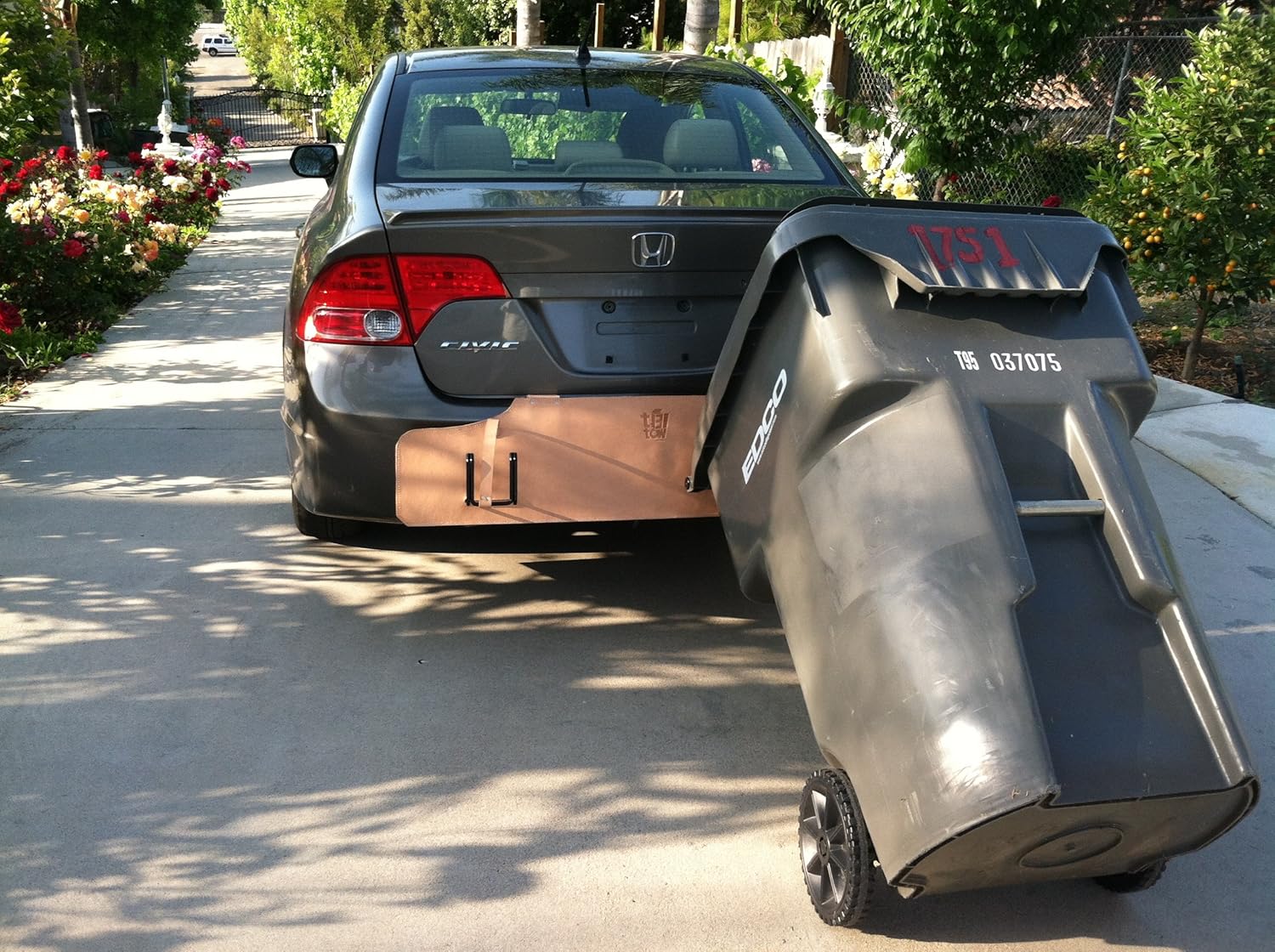
This is a similar product to what I am offering except this requires a specific type of trash bin that apartment renters and condo owners typically don't have.


What are the customer reviews for the product? What, exactly, do customers not like about the product? What do they like about it?

There were only a few reviews but the positive ones said it worked as described.  There was a negative review stating it was not a universal product, in that it worked on some cars but not others.  They also stated that it rubbed off the fragile paint on the bumper.  Another negative was that it required part of the leather to remain in trunk, which made it very difficult to close, along with also possibly damaging the gaskets that line the trunk.

Describe what design/usability changes you'd make to the product. 

From the reviews that I received from the previous product pitch, many people mentioned the same thing that the negative reviews mentioned about the product about.  I redesigned the product to suction to the top of the trunk, and it wouldn't require the bin to carry the trash.  Instead, the bag would be placed in a rubber carrier that would use suction to attach to universally any flat surface.

Describe why you think this product would make a good addition to your current product/service offering.

The product would be my current offering, as there is only one device that satisfies the conditions required to be viable.

Week 11 Reading Reflection

1) What was the biggest surprise for you in the reading? In other words, what did you read that stood out the most as different from your expectations?
I was most surprised by the idea that many companies would try to copy the concepts that created innovation, such as splitting up R&D into teams, without any real goal in doing so.  It seems like something that would be obvious but I hadn't considered that a company would just copy a style and hoped it worked for their company.
2) Identify at least one part of the reading that was confusing to you.
I initially found the four categories of innovation to be confusing, especially distinguishing between the radical and architectural categories.  They gave good examples of them but I'm not sure I would be able to pick the right one given a different example.
3) If you were able to ask two questions to the author, what would you ask? Why?
The author mentioned that he did a lot of consulting for the businesses that he mentioned, I would ask him what types of consulting he did for the businesses and what types of changes came about from his input.  I would also ask the author about his definition of "innovation strategy" at the beginning of the article.  I would like to know if the strategy stems from the mission statement of the company or somewhere else.
4) Was there anything you think the author was wrong about? Where do you disagree with what she or he said? How?
The author had a lot of interesting points, I can't particularly disagree with any of it because most of the article gave specific examples of each type of innovation strategy.

Wednesday, March 23, 2016

My Unfair Advantage

VRIN Analysis

1) Human capital - Me
Valuable- Yes
Rare- Yes
Inimitable- Yes
Non-substitutable- No

2) Social Capital - Network in Chamber of Commerce
Valuable- Yes
Rare- No
Inimitable- Yes
Non-substitutable- No

3) Financial Capital - Investors in my business
Valuable- Yes
Rare- No
Inimitable- No
Non-substitutable- No

4) Access to 3D-Printer
Valuable-Yes
Rare- No
Inimitable- No
Non-substitutable- No

5) Customer Service
Valuable- Yes
Rare- No
Inimitable- Yes
Non-substitutable- No

6) Marketing Experience
Valuable- Yes
Rare- No
Inimitable- No
Non-substitutable- No

7) Sales Experience
Valuable- Yes
Rare- No
Inimitable- No
Non-substitutable- No

8) Support Staff
Valuable- Yes
Rare- No
Inimitable- Yes
Non-substitutable- No

9) R&D Idea Team
Valuable- Yes
Rare- No
Inimitable- Yes
Non-substitutable- No

10) Brand Reputation
Valuable- No
Rare- No
Inimitable- Yes
Non-substitutable- Yes

According to the VRIN Analysis, I would be the most important asset to my company.  Without the mission and determination of the CEO, the rest of the assets are disconnected.  This is understandable due to the nature of the CEO having so many responsibilities during a business's start-up stage.

Sunday, March 20, 2016

Week 10 Reading Reflection

1) What was the biggest surprise for you in the reading? In other words, what did you read that stood out the most as different from your expectations?
There wasn't too much in the reading that stood out to me as it was a basic review of financial accounting.  I did enjoy reading, "Despite what traditional thinking suggests, customers are not always right and they are not always profitable."  This was in regards to when you should take time every year to identify customers that cost more to deal with than they are worth.
2) Identify at least one part of the reading that was confusing to you.
As with most of the chapters, the most confusing thing is trying to understand the tables, When they have definitions in the figures, they are very easy to understand, but the list of numbers don't explain much and it doesn't show how the calculations were done.
3) If you were able to ask two questions to the author, what would you ask? Why?
I would ask the author to examples of what companies use the three different types of capital budgeting and why.  I would also ask the author why they chose to include the excerpt from the article relating to the weakening dollar and the Chinese favoring the Euro from 2007, as only the first paragraph said something about going international to diversify risk, but then it goes on to say, but since it's out of your control, there's really nothing you can do.
4) Was there anything you think the author was wrong about? Where do you disagree with what she or he said? How?
Most of this chapter was a regurgitation of financial accounting definitions and examples, nothing new was added, so not much could be disagreed with.

Wednesday, March 16, 2016

Elevator Pitch No. 3


The comments I received from the second elevator pitch were very good points that I tried to incorporate into this pitch.  Someone mentioned that the original idea would not comply with traffic laws if it hung off the side of the car.  I agreed, so I redesigned the product to use a suction cup to attach on top of the roof or trunk.  He also mentioned that there might be an issue with the Trashport Pro starting to smell like the trash that was being transported, so I changed the material to be resistant to odor absorption.

Sunday, March 13, 2016

Week 9 Reading Reflection

1) What was the biggest surprise for you in the reading? In other words, what did you read that stood out the most as different from your expectations? 
There weren't too many surprising things in this reading as it was about marketing and sales, most of which is covered in Principles of Marketing.  I enjoyed reading about the three marketing philosophies, production-driven, sales-driven, and consumer-driven.  I was a little surprised to read that a consumer-driven philosophy works best in the long run.
2) Identify at least one part of the reading that was confusing to you.
Due to the familiarity of the information in this chapter, nothing was that confusing other than the figures that the author used to display the different types of marketing information.
3) If you were able to ask two questions to the author, what would you ask? Why?
I would ask the author why he is directly quoting a source from 1994 and displaying it in a figure instead of making the figure easier to read and more relevant to today.  I would also ask the author if he could include more examples in this chapter, as it was mostly stating of marketing information rather than modern day examples.
4) Was there anything you think the author was wrong about? Where do you disagree with what she or he said? How?
I don't know if the author is wrong about it or not, but I didn't see any source or statistics to determine how a consumer-driven philosophy would work better than a sales-driven, or production-driven philosophy.  It seems like an opinion rather than a fact.

Wednesday, March 9, 2016

Idea Napkin No. 2

1)  About Myself- My name is Robert Rogers and I am a student at the University of Florida set to graduate at the end of April, 2016.  In addition to my Bachelor's in Business Administration and the many business classes that entails, I also studied many science courses to get into the University of Florida's Chemical Engineering program.  I decided to switch to business after speaking to many chemical engineers during my junior year at UF. After doing this, I discovered that I may be happier in a field that is more people-oriented.
I plan to open my own business after I have more experience working in managerial roles.  Regarding this business concept, I don't see it playing a major role in my life.  It is a potentially marketable product but there isn't much that can be done to enhance the final product.  I really enjoyed the entrepreneurial process of thinking of a product and speaking to potential consumers about the product. 
2) What are you offering to customers? I am offering an easier way to transport trash in apartment complexes and condos.
3) Who are you offering it to? The type of customer that would buy my product would live in a location where they have to drive a short distance in their vehicle to transport trash to a central location.  These would most likely be apartment renters and condo owners.  These people dislike putting trash in their car as they don't like to make the car smell.  They also don't like putting trash on top of their car for fears of it falling off.
4) Why do they care? These customers care about their car and don't like the smell of trash in their car.  They also don't like driving over speed bumps while the trash bag is on their car with fear that it might fall off.
5) What are your core competencies? A product like this doesn't exist as far as I know.  This means their is potential for patenting and selling the concept itself or making the product and selling it.  There currently isn't any competition but unfortunately the product could easily be imitated and reproduced after the patent expires. 

I believe that this concept holds well for an "As-Seen-On-TV" product.  There aren't many enhancements that could be made to the product.  During a customer interview, one customer mentioned the possibility of different sizes, which is a potential option.  The company could continue to grow if it produced different products but after competition arises, it will be hard to differentiate the product.
Feedback Memo:  I only received feedback from one person who mentioned that I should determine the size of the population that would buy the product to find out if it would be profitable or not.  It would be a very good idea to find out before marketing this product so that it isn't put to market only to lose money.  I read several other Idea Napkins and incorporated a different approach in my introduction.  I liked that other people were more formal and set up the introduction like an interview.  I incorporated this theme into my introduction and plan to use part of the introduction in upcoming interviews.